Friday, April 1, 2011

How I Dealt With Love Wins, by Rob Bell

I originally read this quote on another blog, and knew it was the perfect introduction to a Love Wins post. I laughed, and thought I would use it:

"Just in case you’re an irrelevant Christian who listens to Nickelback instead of Mumford and Sons, has a burden to reach Latin America instead of Africa or Europe, and who has held out on signing up for a Twitter or Facebook account, Christians are in an uproar. Rob Bell released a promotional video last weekend for his upcoming book Love Wins: A Book About Heaven, Hell, and the Fate of Every Person Who Ever Lived."

To be fair, I met a few Bible college students the other night who did not know of this internet debate. But one thing is certain, Mumford > Nickelback.


I debated writing my own thoughts. Everyone and their mom has an opinion on this book. What's one more blog post? The decision to write was that I have strong feelings about what I read and have observed. Instead of repeating myself over again, one long post will suffice. I read Love Wins in two days and tried my best to remain objective. I thoughtfully worked through his arguments and stories before formulating my own opinions.


Before I begin, let me say that this topic has reminded me why I hate debating, and why I love discussion. I learn more about a topic by discussing things with my good friend and blogger, LJ, than I do in debates with other people.

In discussions, I'm more open to other peoples opinions, I am more willing to change my own view, I'm more willing to say that I am wrong, I offer more respect and feel more respected, and feel I am more patient.

Some people like to debate. Some people can debate healthily. I can't.

Furthermore, I don't hate Rob Bell. I'm not going to call him a wolf or whatever. I don't hate that he wrote this book. He has the right to write and publish whatever he wants. Do I think it was a poorly written book? Yes. Why did I write this post? Because I have strong feelings about the book's content, and some people wanted to hear my opinion. Simple as that.

I believe that Bell has a huge love for people, which I think fuels this book. His anecdotes are powerful. His passion, contagious.

He has been, and probably always will be, a huge influence on my life and communication style.


So now, here are things that I did not like about Love Wins, by Rob Bell.
(followed by additional thoughts)

1. In the opening pages, Bell claims that the story of Jesus has been hijacked. 

"There are a growing number of us who have become acutely aware that Jesus's story has been hijacked by a number of other stories, stories Jesus isn't interested in telling. Because they have nothing to do with what he came to do. The plot has been lost, and it's time to reclaim it. 
A staggering number of people have been taught that a select few Christians will spend forever in a peaceful, joyous place called heaven, while the rest of humanity spends forever in torment and punishment in hell with no chance for anything better. It's been clearly communicated to many that this belief is a central truth of the Christian faith and to reject it is, in essence, to reject Jesus. This is misguided and toxic and ultimately subverts the contagious spread of Jesus's message of love, peace, forgiveness, and joy that our world desperately needs to hear." -Bell

That the way every pastor and every Bible scholar has told the story of Jesus, it's a massive corruption from what God intended. As I read it, the first few pages let us know that everything we've ever been told about God's love is corrupted, and that Bell has written this book to set things straight.

I can't help but see this as a slap in the face to everyone who has told the traditional story of Jesus. We hijacked it? Turned it toxic and into an anti-Jesus message?

Hardly.

2. The thesis of Bell's book, as I read it, is that God's love is so great, that after death, people get a second chance of redemption. Hell is a place of temporary correction. To argue this, he looks at Matthew 25:46, arguably the most important verse on this subject matter:

"And they will go away into eternal punishment, but the righteous into eternal life."

Bell argues that the very idea of 'forever' and 'eternal' as we understand it, is not what the Biblical writers intended. Unendingness is not a biblical reality.

"But 'forever' is not really a category the biblical writers used.
One meaning of aion refers to a period of time, as in "The spirit of the age" or "They were gone for ages." When we use the word "age" like this, we are referring less to a precise measurement of time, like an hour or a day or a year, and more to a period or era of time. This is crucial to our understanding of the word aion, because it doesn't mean "forever" as we think of forever. When we say "forever" what we are generally referring to is something that will go on, year after 365-day year, never ceasing in the endless unfolding of segmented, measurable units of time, like a clock that never stops ticking. That's not this word. " -Bell

Eternal, here, is the greek word aiōnios.

Bell argues that the ONLY way to interpret this word is 'a temporary intense moment of time' an 'age' 'a time with a beginning and an end' . But as I read this Greek lexicon, it gives the outline of Biblical usage for aiōnios:

1) without beginning and end, that which always has been and always will be
2) without beginning
3) without end, never to cease, everlasting

Granted, there are four places where NT translators chose to translate the word aiōnios, or it's derivative as 'an age', or 'period of time': Romans 16:25, 2 Timothy 1:9, Titus 1:2 and Romans 16:26.

What bothers me is that Bell is arguing that the ONLY way to interpret this word is temporary, not our idea of eternal. His lack of flexibility here bothers me.

But what if he is right?

The word is semantically flexible. If punishment/correction is only a period of time, then what about the rest of the verse? Is the alternative, eternal life, merely a temporary period? What happens when our 'eternal' life is over? Do we cease to exist?

I see this as a huge inconsistency.

"And they will go away into 'temporary punishment/correction', but the righteous into 'temporary life'."

What does that even mean? I think this is the most important argument Bell needs to make, and it falls short.

3. The second book under 'Futher Reading' is fictional classic The Great Divorce*, by C. S. Lewis. The book chronicles the narrator's journey. He starts at a bus station that we later find out is hell. Riding the bus into the clouds, he and the other passengers reach heaven. Residents of hell quickly discover that they hate heaven. They are ghosts, whose feet are stabbed by grass. Heaven is such a greater reality, that it turns the residents of hell into mere shadows.

All of hell's residents are given the opportunity to stay in heaven, but most choose to climb back into the bus to return to hell.

I decided to re-read The Great Divorce after finishing Love Wins. In the preface, Lewis gives this warning:

"I beg readers to remember that this is a fantasy. It has of course-or I intended it to have-a moral. But the transmortal conditions are solely an imaginative supposal: they are not even a guess or a speculation at what may actually await us. The last thing I wish is to arouse factual curiosity about the details of the after-world."

I could be oversimplifying, but in my re-read of The Great Divorce, it seemed that Bell's theology was shaped heavily by this fictional book. Bell's description of hell, the postmortem choice and descriptions of heaven share a lot of characteristics to The Great Divorce.

[*I did find the entire book, The Great Divorce, on a website. A great book worth a read.]

4. I'm not that smart. And I've only read the book once. So I look to our leadership in the Church. To respected pastors and Bible scholars for their opinion on Bell's arugments. As I read the many opinions of pastors and Bible scholars that I respect, I haven't found one that agrees with the Biblical arguments that Bell presents.

Here are the only positive reactions I've found:

Greg Boyd says Bell is not a universalist.

Matthew Paul Turner says not to demonize Bell.

Brian McLaren supports Bell, but most do not consider McLaren a reasonable Biblical voice (just being honest).

Ed Dobson didn't read the book, but supports Bell anyway.

If there are others, feel free to list them. I'd like to hear their thoughts.

5. I'm tired of hearing, "You need to read it for yourself," and other similar comments. Is it good advice? Yeah. Do I have a good reason for being tired of it? No. I just wanted to vent.

6. I hate how it's brought the worst out in Christians. Viral blogs are full of commenters gnashing, biting, and arguing about theology. The real tragedy is when we divide love from theology. What's more, is that more Christian attention was put on Bell than the catastrophe in Japan.

7. Bell asks a LOT of questions. Good questions. We have good, satisfiable answers to these questions. But Bell ignores traditional answers. Intentionally, I assume, writing in a way to lead the reader through a series of emotions, opening them up to his answers. But traditional answers shouldn't be ignored.

Most of Bell's questions build emotion in his readers.

"If there are only a select few who go to heaven, which is more terrifying to fathom: the billions who burn forever or the few who escape this fate? How does a person end up being one of the few?
Chance?
Luck?
Random selection?
Being born in the right place, family, or country?
Having a youth pastor who 'relates better to the kids'?
God choosing you instead of others? 
What kind of faith is that?
Or, more important:
What kind of God is that?" -Bell
In order to appeal to the heart of the reader, Bell is asking these frequently asked highly emotional questions. The problem with these questions, and the problem with Love Wins in general, is that it starts at the opinions of man (man's definition of love) to point out the problems of a traditional Biblical God.

Rather, we are to start with Scripture, to see that God is Holy and man is sinful. We find that the phrase Love Wins is true, but differently than his book would have us to believe.


Other thoughts:

1. I don't know what Rob Bell was thinking. I enjoy trying to figure out how people think, and why they say the things they say, write the things they write, talk the way they talk. That's why I love watching movies. I'm not just experiencing a plot or characters. I'm trying to figure out what is going through the directors head, why the screenplay was written like that, etc.

For a while, I followed John Mayer on Twitter. After a few months, I realized I couldn't understand anything that he was tweeting. He thinks differently than everybody else. That's why he writes songs no one else can write. He's an amazing writer, but I have no idea what inspires him, or why he goes in the direction he chooses. He's an artist.

I think the same is true for Bell. He's an artist and a genius. He doesn't think like everybody else. His methods have always been unorthodox. From what I understand, he had struggling grades through communication, speech, and sermon classes in school. Not because he can't communicate, but because he doesn't communicate like everybody else. Because he tries new things. Because he goes into uncharted territory.

Why did he write Love Wins? Because he enjoys controversy? Because he thinks all of Christianity really has been hijacked? Because he wants to create meaningful discussion? Because he's a wolf? Because he enjoys being different? Because he wanted to sell books? Because NOOMA videos don't sell as many as they used to? Because he wants to redefine 'love'?

I don't know.

2. Justin Taylor is responsible for the book's massive publicity. I first heard about Love Wins because I read saw Taylor's blog posted by one of my friends on Facebook. Taylor blogs for thegospelcoalition.org. I read the blog, and posted it on my own Facebook, as I do with a lot of blogs that I read that I find interesting. It eventually went viral because so many people re-posted it. What I didn't know is that Taylor's blog had been revised several times. The original post called Bell a 'servant of Satan' and other off-color remarks.

And then there was John Piper's infamous tweet: "Farwell Rob Bell",

These were both written without actually reading Love Wins. Both jumping the gun, and displaying immaturity.

Greg Boyd put it best in his blog post, Rob Bell is NOT a Universalist (and I actually read “Love Wins”):

"Which is why this is a good conversation worth having…
but not on Twitter…
and not by accusing and labeling and bidding a brother “farewell” before you’ve even read the book!
THAT is madness!"
3. The name 'Rob Bell' and his long time used phrase 'love wins' now carries a great deal of baggage (I know it already did, but more now than ever). I've always liked it when Bell said, "Love wins." It's a powerful phrase. And I still believe it. Just not in the same way he means it. From now on, when I mention Bell, or use a NOOMA video, there will always be an unspoken (or spoken) awkwardness.

In short, he's lost more of his credibility.

4. I'm not sure why people love this book. Some of my friends love this book.

Maybe they agree with Bell's arguments.

Maybe they didn't do the Greek research.

Maybe they don't take the Bible literally. Or take all parts equally inspired by God.

Maybe they love books, speakers, or ideas that make conservative Christians angry. Maybe they get a kick out of making certain people feel uncomfortable.

I don't know. If you love this book, feel free to tell me why. I'm open to listening.


8. I’m not sure what to make of people saying ‘this book is art’ and shouldn’t be judged theologically. If it shouldn’t be judged theologically, then it shouldn’t be taken theologically. Then I better stick it next to my copy of The Great Divorce.

9. I didn't deal with most verses that Bell uses. That would make this post entirely too long. Isn't it already too long? Thank you for sticking with me this far. For an exhaustive discussion on Bell's Scripture usage, see Kevin DeYoung's review God is Still Holy.


10. My good friend wrote this convicting conclusion on his tumblr


"I love Rob Bell and I love John Piper too for that matter. But at the end of the day, it doesn’t really matter what either one says. What matters is the searching of Scriptures within context, within community, with one another and God that what is written there has Authority, Mystery, Love, Grace, Justice, Mercy, Adventure, Creativeness, Uniqueness and Power to change lives."

11. Bell asks a lot of good questions about who goes to heaven and who goes to hell. He brings up the 'age of accountability'.


"Some Christians believe that up to a certain age children aren't held accountable for what they believe or who they believe in,so if they die during those years, they go to be with God. But then when they reach a certain age, they become accountable for their beliefs, and if they die, they go to be with God only if they have said or done or believe the 'right' things." -Bell

Here is what I believe on the issue.We could debate for a lifetime on who goes to heaven, and who goes to hell. In all of these questions, I rest in the fact that God is Judge. The impossible dilemmas we see are split-second decisions to Him. And His decision goes. And who are we to question? A fascinating ending to the book of Job shows us one great man's reaction to a holy God's presence.

"The LORD said to Job:
“Will the one who contends with the Almighty correct him?
Let him who accuses God answer him!” 
Then Job answered the LORD:
“I am unworthy—how can I reply to you?
I put my hand over my mouth.
I spoke once, but I have no answer—
twice, but I will say no more.” 
Then the LORD spoke to Job out of the storm:
“Brace yourself like a man;
I will question you,
and you shall answer me.
“Would you discredit my justice?
Would you condemn me to justify yourself?"
Job, a wise, patient, holy man, when standing before God, could only reply, "I put my hand over my mouth." 

Likewise, I think all of our questions, debates, arguing over what happens in eternity will all fade as quickly as God makes his Judgement.

12. I will always believe that in the end, Love Wins.


Thursday, January 13, 2011

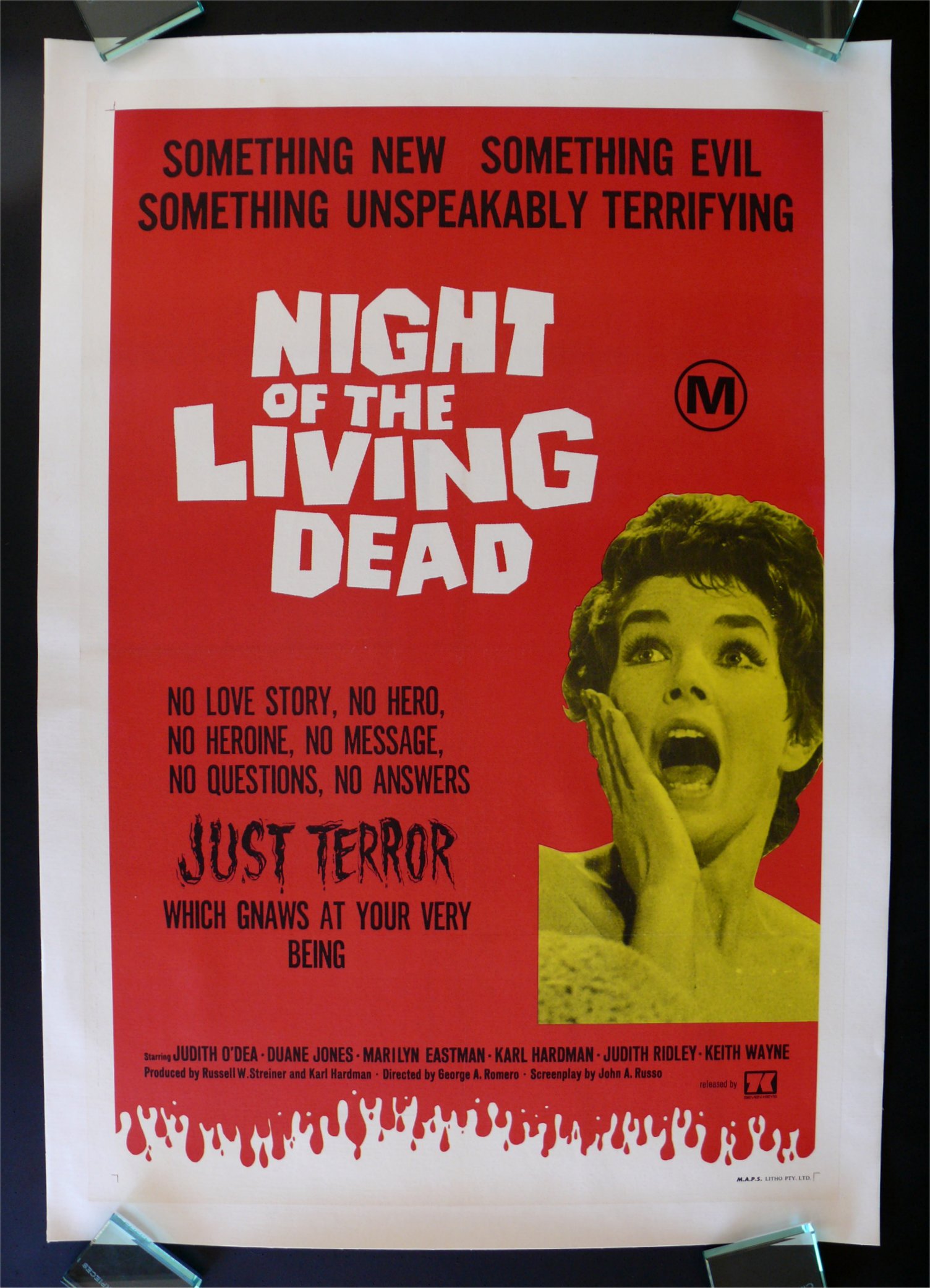
What Do Zombie Films and Billy Graham Have In Common?

I love zombie films.

Well, the entire post-apocalyptic genre, but zombie stories in particular. Zombie movie marathon? Yes, please. And I'll bring the Funyons.

Is it the senseless violence? Sure, that's a part of it. Sometimes it's fun to turn off the realistic part of my brain and enjoy some intense action.

Is it a fascination with the dead? No way. Technically, they're un-dead. But regardless, this has little to do with it. There is nothing spiritual or demonic going on here. Usually just a man made virus, if they even take the time to explain the zombies at all.

Here is why I love zombie stories. Because I can't help but think,

"What would I do?"

Would I be the quiet guy who eventually has a nervous breakdown? Or would I be the unrealistic action seeker and die an early and needless and utterly preventable death? Or would I be the guy who keeps his cool under the worst of situations? The guy with a plan. The guy who inspires hope. The guy who unifies everyone together for the one common goal: to survive.

Post-apocalyptic stories have this way of asking what would life be like if everything had to start from scratch. The world we once knew is gone: laws, order, the American Dream. Now all that is left is chaos, disorder, fear. But there is always a leader who inspires hope to the hopeless. A promise of restoration.

I have been most impressed with the latest zombie story, The Walking Dead. A six episode first season of a well budgeted, high quality written TV show. The season ends with a great dialoge between the main character, Rick and a disgruntled scientist.

"You're lying when you say there's no hope. All we want is a choice. A chance. We need to try for as long as we can." -Rick

What drives Rick is this idea that somewhere, there is refuge from danger. Somewhere there is a safe life for him, his wife, and his son. So he chooses to fight. He chooses to keep going. Is his hope unrealistic? Naive? Immature? Or is his optimism the last best thing to hold on to?

So what does all this have to do with Billy Graham? You probably have already put it together: Hope.

People closest to Billy Graham describe him as a pessimist. His natural outlook on life is that things are probably going to get worse. In order to lead, he has to purposefully and intentionally communicate hope and optimism. Marshall Shelley, who wrote The Leadership Secrets of Billy Graham, describes him this way in this powerful quote,

"Optimism is not living in a fantasy world where nothing tragic ever happens; vital optimism is a confidence that tragedy isn't the last word, that the best is yet to be. Optimism is being able to acknowledge brutal realities and to the point an even greater reality - that our experiences are not in vain, our responses are not futile, and our efforts are going to be worthwhile. 
Christian leaders like Billy Graham most often link this optimism and hope to an abiding trust that history is going somewhere and that God, who specializes in redeeming flawed situations, is powerfully directing it. But hope is the basic psychology and biology. 
Sometimes, brining hope to a dispirited group is the most important thing a leader can do." 
Sure. I admit. It's no zombie apocalypse out there.

But it isn't great either.

In a lot of ways, things are very terrible for a lot of people. But sometimes the greatest thing we can bring to the world is hope. Hope that we can help change things. Hope that Jesus can still bring healing grace. Hope that tragedy does not have the last word.

And we intentionally bring hope with us.

Who would of thought the two had anything in common?

(Sorry I dont blog much anymore. I love doing it, but finding time is harder with a daughter and a full time job. I'm sure you understand. And thank you everyone for your constant encouragement. More to come soon.)

--------------------
And how can we bring hope to hurting people?
Anyone love zombie films as much as me?

Tuesday, December 7, 2010

I'm sorry. I don't speak Christianese.

Apologies for this not coming out on Tuesday, but I have been enjoying life with my wife and newborn daughter Reagan. So I had more fun holding Reagan than thinking about writing this weekend. So to make up for my absence, here is a picture of her on our drive home from the hospital. 

Now, onto the blog.
-------------------------


Observation and Confession time.

We all have preferences. Mine?

Coffee? Two creams, one sugar.
Hamburgers? All the way.
Style of preaching? Conversational.
Leadership? Relational and influential.

As weird as this sounds, I don't like using jargon. Especially Christian jargon.

"Praise the Lord.
Amen, brother.
God is faithful like that.
Blessed and highly favored.
Saved. Sanctified. And filled with the Holy Ghost.
Bless their heart."

First, there came a point in my life when I realized that everybody doesn't talk this way. But our pastors and preachers have used these phrases from the pulpit for years. And people in the crowd know what they mean, or at least pretend they do.

When I figured out that non-Christians, and Christians who don't go to these types of churches, don't use or even understand these phrases, I made it a point to use terms everyone knows, with the intention to be understood by more people.

Obviously, I'm not the only one who feels this way. You probably feel the same, or at least know people who do. Pointing this out isn't all that significant. I know.

What I want to confess is that now, since it's been so long since I switched, I get agitated when I hear it. Annoyed even. And I've watched friends of mine even make fun of people who speak this 'Christianese'.

So I've come some sort of full circle.

I used jargon.
I noticed the problems with jargon.
I quit speaking jargon.
I get annoyed with people who use jargon.
I was annoyed at myself for getting annoyed at people using jargon.
And now I get annoyed when other people get annoyed for people using jargon.

And I don't really know what to think. Does this even matter? I think so because it negatively affects our attitudes towards other Christians. Do I have a solution? Besides getting over it? Nope. What do you think?

But again, I don't want a secret code that only certain people understand. I don't want people to need a translator to know that I'm giving them advice.


-------------
Does it bother you? Do you think it's a big deal?

Sunday, November 21, 2010

God the 'Father'? Why Pick a Name With So Much Baggage?

It's weird to think of God as Father. Couldn't He have picked a better metaphor to describe himself? Granted, I was fortunate to have a great father. He took us to Braves games, provided for us on a military budget, and always showed interest in our sports endeavors.

But I know too many people who had bad fathers. Fathers that never cared for their kids. Fathers that never returned calls at Christmas. Fathers who chased younger women. Fathers who found their identity and worth in work, and choosing to neglect their family.

For too many, the title 'father' carries baggage. Bad memories. And hurt.

In the Old Testament, no one ever called God by the name of 'Father'. Ever.

God was called holy.
God was called a warrior.
God was called a rock.
God was called master.

But God was never called Father.

So when the disciples asked, "How should we pray?" you have to understand how unheard of it was for him to begin, "Our FATHER, who is in heaven..."

I'm sure the disciples thought, "Did he just say that?! Father?"

But Jesus invited us to do something intimate. Special. Inviting. Personal.

He called us to join the family of God. To call God, Father.

I began to better understand this when I read this powerful quote by George MacDonald,
"In my own childhood and boyhood my father was the refuge from all the ills of life, even sharp pain itself. Therefore I say to son or daughter who has no pleasure in the name Father, you must interpret the word by all that you have missed in life. All that human tenderness can give or desire in the nearness and readiness of love, all and infinitely more must be true of the perfect Father - of the maker of fatherhood."
This week I will become a father to my daughter, Reagan Arcadia. When she is born, I am told that my entire outlook on life will change. Which, I'm sure is true. But most importantly, my perspective on who my heavenly father is will change. How He cares. How He wants the best.

----------
If you had a bad father, how do you feel about calling God your Father?

Sunday, November 14, 2010

The Danger of Bumper Sticker Ideology

So I'm reading this book about a guy who dressed up in a bumper sticker suit. After he convinced his wife to let him out of the house with the goofy thing, he headed to Time Square, New York.

His goal? To open up discussion with anybody willing. He asked questions about God, the Church, and their favorite bumper sticker on his suit.

His intent? To facilitate meaningful conversation.

It's not that I think bumper stickers are wrong. Not at all.

Although they do affect the resale of your car. You want bumper stickers? Cover to your heart's content.

But what bumper sticker guy and I are saying is that the ideology of a bumper sticker cheapens communication. This mindset robs us of the art of conversation.

Bumper sticker ideology offer one way communication. I know that I don't want to be the type that only has something to proclaim or to communicate, and doesn't have the time or ability to facilitate honest conversation.

Bumper sticker ideology only offer simple answers. Life is complex. Big questions often have complex answers. I feel cheated when a complex question is answered with a cliche just short enough to fit on the back of my car. Tough questions deserve thought out explanations. Tough questions deserve to be explored.

Bumper sticker ideology devalues opposing opinions. When we use one way communication methods, we communicate a lack of care or interest in rebuttals. We communicate that we don't care about other people's opinions. Sometimes that's not what we are trying to do. Other times, if we're honest, that's exactly how we feel: you're opinion is unimportant in this conversation. It communicates that 'I am right and you are wrong.' And we show that we are unwilling to learn from other people.

I'll admit. It's harder to facilitate conversation over this one way communication.

It takes relationship (relationships can be messy).

It takes longer (credibility has to be established).

It takes more research (tough questions deserve researched answers).

In short, let me ask you this,

"Has a bumper sticker answer ever changed your mind on a tough issue? Or just supported what you believed?" 


Book written by bumper sticker guy.

Sunday, November 7, 2010

Subconscious Imitation

I recently read this fascinating story about mentorship and imitation. It is by Dr. Paul Brand, a man who gave up a prestigious medical career to serve lepers in India.

"Curtains screened my group of ten interns and medical students from the rest of the forty-bed ward. Those of us inside the curtains were giving full attention to our young colleague as he made his diagnosis. He was half-kneeling, in the posture I had taught him, with his warm hand slipped under the sheet and resting on the patient's bare abdomen. While his fingers probed gently for telltale signs of distress, he continued a line of questioning that shoed he was weighing the possibility of appendicitis against an ovarian infection. 
Suddenly, something caught my eye - a slight twitch of movement on the intern's face. Was it the eyebrow arching upward? A vague memory stirred in my mind, but one I could not fully recall. His questions were leading into a delicate area, especially for demure Hindu society. Had the woman ever been exposed to a venereal infection? The intern's facial muscles contracted into an expression combining sympathy, inquisitiveness, and disarming warmth as he looked straight in the patient's face and asked the questions. His very countenance coaxed the woman to relax, put aside the awkwardness, and tell us the truth. 
At that moment my memory snapped into place. Of course! The left eyebrow cocked up with the right one trailing down, the wry, enticing smile, the head tilted to one side, the twinkling eyes - these were unmistakably the features of my old chief surgen in London, Professor Robin Pilcher. I sucked in my breath sharply and exclaimed. The students looked up, startled by my reaction. I could not help it; it seemed as if the intern had studied Professor Pilcher's face for an acting audition and was now drawing from  his repertoire to impress me. 
Answering their questioning looks, I explained myself, "That is the face of my old chief! What a coincidence - you have exactly the same expression, yet you've never been to England and Pilcher certainly has never visited India." 
At frist the students stared at me in confused silence. Finally, two or three of them grinned. "We don't know any Professor Pilcher," one said. "But Dr. Brand, that was your expression he was wearing." 
Later that evening, alone in my office, I thought back to my days under Pilcher. I had thought I was learning from him techniques of surgery and diagnostic procedures. But he had also imprinted his instincts, his expression, his very smile so that they,too, would be passed down from generation to generation in an unbroken human chain. It was a kindly smile, perfect for cutting through the fog of embarrassment to encourage a patient's honesty. What textbook or computer program could have charted out the facial expression needed at that exact moment within the curtain? 
Now I, Plicher's student, had become a link in the chain, a carrier of his wisdom to students some nine thousand miles away. The Indian doctor, young and brown-skinned, speaking in Tamil, somehow he had conveyed the likeness of my old chief so accurately."*

This story amazes me at how subconsciously powerful mentoring can be. In this case, in the field of bedside manners for the interest of the patient. But the same is true in how we teach, how we conduct meetings, how we sell products, and most importantly, how we strive to be like Christ. As Paul once wisely said,

"Be imitators of me, as I am of Christ." (1 Corinthians 11:1)

*This story is the opening illustration of In His Image, by Dr. Paul Brand and Philip Yancey.

Sunday, October 31, 2010

A Light at the End of the Prayer Tunnel

I'm not the first to admit that I don't understand prayer. And I won't be the last.

To be honest, life since college has been tough for me. I am one of the many Americans to graduate higher education and get hurt by the job market. Even though I graduated over three years ago, I have not had a full time job that has paid more than $8 an hour. Embarrassing, huh? Even if you don't think so, it's definitely nothing to be excited about.

As an undergrad with a degree in Ministry, I've searched for a long time to find a job.

I feel like I've done it all.

Networked.
Online searches.
Volunteered.
Followed every lead I could find.
Asked mentors for advice.

But more than anything, I prayed.

All the time.

I asked God a lot of questions.

"Why have you given me these gifts and nowhere to use them?"

"Why have you given me a passion and a vision with nowhere to implement them?"

And no answer.

I can't say how many times I said, "I should just give up."

And too many times, I was so close to a hire, but the opportunity crumbled before me.

So last year, in September, I had the idea to implement my desire to teach on a blog. That idea eventually became this site. So I wrote.

And wrote.

And wrote.

Until I found my niche.

Until I found my ministry.

Granted, this doesn't pay anything. But I have received three free books. And typically, books don't pay the bills.

I even wrote a post for people in my situation, exploring the idea of failure, and how to persevere.

But you, my readers, became my focus.

Fast forward to today.

This morning I spoke at the Cleveland Worship Center as the new Student Minister/Associate Pastor.

As I breathe a sigh of relief, I can now put to rest worries of raising a daughter. She will be born in less than a month. And I now have a way to provide for her.

Honestly, it seems unreal. Like a dream I am soon going to wake from. Like a prank about to spring on me.

But as far as I know, I have to be at the office at 8am tomorrow. You better believe I will be there, with french pressed coffee flowing through my veins.

If you are wondering, I will still be faithful to you, my readers. I will continue to write to the best of my ability. You're too good to pass up.

But as it comes to prayer, I often wonder about God's timing. Why did He wait so long?

1. Was He teaching me about patience?

2. Was He protecting me from more bad experiences?

3. Did He want me to arrive at the Cleveland Worship Center in this stage of my life?

4. Did He want me to wait till I hit the end of my rope?

I could list a thousand more reasons, and not be closer to knowing WHY.

I don't understand why God works the way He does.
I don't know.
I don't know why you're prayers are still unanswered.

But I do believe that God is good. Not always safe. Not always fun. But good.

And tomorrow, for the first time in a long time, I will know that I have a purpose, a place to implement my gifts, students to minister to, and an income to provide for my family.

And I couldn't be more excited.

A Light at the End of the Prayer Tunnel

I'm not the first to admit that I don't understand prayer. And I won't be the last.

To be honest, life since college has been tough for me. I am one of the many Americans to graduate higher education and get hurt by the job market. Even though I graduated over three years ago, I have not had a full time job that has paid more than $8 an hour. Embarrassing, huh? Even if you don't think so, it's definitely nothing to be excited about.

As an undergrad with a degree in Ministry, I've searched for a long time to find a job.

I feel like I've done it all.

Networked.
Online searches.
Volunteered.
Followed every lead I could find.
Asked mentors for advice.

But more than anything, I prayed.

All the time.

I asked God a lot of questions.

"Why have you given me these gifts and nowhere to use them?"

"Why have you given me a passion and a vision with nowhere to implement them?"

And no answer.

I can't say how many times I said, "I should just give up."

Last year, in September, I had the idea to implement my desire to teach on a blog. That idea eventually became this site. So I wrote.

And wrote.

And wrote.

Until I found my niche.

Until I found my ministry.

Granted, this doesn't pay anything. But I have received three free books. And typically, books don't pay the bills.

I even wrote a post for people in my situation, exploring the idea of failure, and how to persevere.

But you, my readers, became my focus.

Fast forward to today.

This morning I spoke at the Cleveland Worship Center as the new Student Minister/Associate Pastor.

As I breathe a sigh of relief, I can now put to rest worries of raising a daughter. She will be born in less than a month. And I now have a way to provide for her.

Honestly, it seems unreal. Like a dream I am soon going to wake from. Like a prank about to spring on me.

But as far as I know, I have to be at the office at 8am tomorrow. You better believe I will be there, with french pressed coffee flowing through my veins.

If you are wondering, I will still be faithful to you, my readers. I will continue to write to the best of my ability. You're too good to pass up.

But as it comes to prayer, I often wonder about God's timing. Why did He wait so long?

1. Was He teaching me about patience?

2. Was He protecting me from more bad experiences?

3. Did He want me to arrive at the Cleveland Worship Center in this stage of my life?

4. Did He want me to wait till I hit the end of my rope?

I could list a thousand more reasons, and not be closer to knowing WHY.

I don't understand why God works the way He does.
I don't know.
I don't know why you're prayers are still unanswered.

But I do believe that God is good. Not always safe. Not always fun. But good.

And tomorrow, for the first time in a long time, I will know that I have a purpose, a place to implement my gifts, students to minister to, and an income to provide for my family.

And I couldn't be more excited.

Sunday, October 24, 2010

My Stance on Prayer and Politics

Years ago, I was into music.

And when I say into, I really mean consumed by.

Truth be told, I think I'm losing my hearing. And I think it's because I stood in the front row to see countless bands, screaming every lyric along with them. Now that all of my favorite bands have broken up, I've given away most of my CDs and my wife has to repeat herself because her deaf husband didn't hear her the first time.

Do I regret it? No way! Those days were great.

One summer, three of us drove seven hundred miles to Cornerstone, Illinois. 300 bands were scheduled to play, and I credit most of my hearing loss to those five days of rock.

One particular morning, I woke early to a stump poking out of the ground, through my sleeping bag and into my back. Rising sooner than I wanted to, I began to walk from booth to booth, stage to stage.

I happened upon the Rock for Life stage. Rock for Life was a non-profit music organization that advocated pro-life. My interest piqued, I stepped over to see an organized group in conversation. A session was just ending.

They finished with prayer. And that day, my perspective on prayer made a huge shift.

The guy leading the session ending with this conversation with God,

"God, we pray for the hearts of abortion doctors. So that they would become Your followers and leave their profession. Thus ending abortion.

My head could not fathom the humility that I was hearing.

Jesus' words came to mind, "Love your enemies and pray for those who persecute you...If you love those who love you, what reward will you get? Are not even tax collectors doing that?"

Here was a guy who was praying for his enemies. Not that they would fall, but that God would spiritually change their hearts. And on such a controversial topic such as abortion, he chose to love his enemies, wishing the absolute best for them (that they would encounter God).

Sometimes, I feel like we spend too much energy trying to gain political power, rather than praying for spiritual change.

Regardless of your position on politics like abortion, America will not heal by having the right law passed, or the right person in office.

These are spiritual problems. And political solutions cannot fix spiritual problems. 

I challenge myself, and you, to have an attitude like this Rock for Life guy, to pray NOT for political, professional, or or social power.

But for hearts to be changed.

---------------
In what ways does your spirituality affect your politics? 

Sunday, October 17, 2010

The Pain of Unanswered Prayer

The question isn't, "If I pray, is God going to come through?"

In the spirit of keeping things honest, this is the question that hurts my heart, "Why does God sometimes comes through and answer our prayers, and sometimes He doesn't?"


Good people. Faithful people. Holy people. Offering very serious, honest prayers to a loving God. 

Sometimes He answers. Sometimes He doesn't.

One parent loses a child. Another's is miraculously saved. 

Cancer will miraculously heal. Other times kill. 

Some barren women beat all odds and give birth. Others remain childless. 

So what are we to make of the inconsistency. 

Of all of the examples of prayer I could give you, both answered and unanswered, I have picked two from Scripture. 

The first in Exodus 32. 

God's anger for the golden calf idolatry would bring the destruction of Israel. And God told Moses that he would create a new nation through him. 

God tells Moses, "I have seen these people (Israelites) and they are a stiff-necked people. Now leave me alone so that my anger may burn against them and that I may destroy them. Then I will make you (Moses) into a great nation." 

But Moses sought the favor of God. He prayed, as if to remind God of his love, patience, and promises for Israel. And God relented his anger. 

This is a fantastic story of how a humble man's prayers directly affected an outcome. It's easy to read this passage. Even easier to teach it, as if all you need is humility, a right relationship with God, and a faithful prayer to get what you earnestly want. 

But we contrast this story to one we read in 2 Corinthians. 

Here, we have Paul, presumably an equal to Moses' humility, relationship to God, and faithfulness to prayer. Paul talks vaguely about a 'thorn' in his flesh, given to torment him. Three times he prayed to God for healing. And God's response shakes my idea of prayer, "My grace is sufficient for you, for my power is made perfect in your weakness." 

Or, more simply put, "No." 

So how do we view prayer in light of these two contrasting Biblical narratives? 

My attempt:

Do our prayers change the way events will unfold? Yes.
Do they ALWAYS change the way events will unfold? No. 

Does this make sense to me? Not really. 
Is this something that I can accept? Yes. 

In these two biblical accounts, we get to see behind the scenes and hear what God is thinking. But for every other extra-biblical account of prayer, we never truly know why some prayers get answered, and some don't.
Whatever cosmic and mysterious answers there are, we will likely never know. 

So I pray earnestly, knowing that my prayer COULD change the course of events. 

And when they don't, I rest in the sovereignty of God knowing that He is in control, even if that means a painful circumstance for myself or loved ones. 

---------------
How have you come to peace with unanswered prayer?  

Sunday, October 10, 2010

I Finally Found the Point

One poet said,
"Prayers like gravel
flung at the sky's window,  
hoping to attract the loved one's attention."
And that's a quote I can really relate to. All too often, it feels like I am a child, assuming that my best efforts, like throwing rocks in the air, is the way to get God's attention. Did I lose his interest? Did I do something wrong? How long should I keep this up?

I've always had a hard time with this. And it was a long time before I heard a good answer.

What's the point?


Why pray? When God already knows? And why pray when God is sovereign, anyway?

1. You may already have a satisfactory answer.
2. You may have just quit asking.
3. Or you may have just given up on prayer altogether.

Whatever the case, the story has helped me find peace with the question, what's the point?

"My pastor spent a day of hard labor installing stone steps in his backyard. The individual stones weighed between a hundred and two hundred pounds, and it took all of his strength and a few tools to maneuver them into place. His five-year-old daughter begged to help. When he suggested she just sing, to encourage him in his work, she said no. She wanted to help. Carefully, when it would not endanger her, he let her place her hands on the rocks and push as he moved them. 
He admitted later that Becky's assistance actually complicated the task. He could have built the steps in less time without her 'help'. At the end of the day, though, he had not only new steps but a daughter bursting with pride and a sense of accomplishment. "Me and Dad made steps," she announced at dinner that night. And he would be the first to agree."

God could do so much greater without us.

It's as simple as that. He could. But he chooses not to. God could restore the world without us. But he chooses to restore and redeem using our hands, using our prayers. And looking through the eyes of a parent making stone steps, it helps me understand the mystical experience of prayer.

So your heart asks, what is the point of prayer?
To accomplish things WITH God that only he can do. 

Sunday, October 3, 2010

The Hard Part of Praying

If you’re anything like me, then prayer doesn’t come easy. I hear about people who pray for three hours every morning, and my head spins. That’s something to admire, but nothing I could emulate.


So I was amazed and relieved when I read what the great poet and philosopher John Donne said about his prayer life.

“I throw myself down in the Chamber, and I call and invite God and his angels. And when they are there, I neglect both God and his angels. For the noise of the fly, the rattling of the coach, and the whining of the door. I remember yesterday’s pleasures, tomorrows fears and dangers, a straw under my knee, a noise in my ear, a light in my eye, and anything, and nothing. All troubles me in my prayer.”

When I quiet myself, open my mind to God, every little detail about the room floods my mind. A straw under my knee, or the discomfort of my chair. Details of my life come to the surface. And the time I set for God soon becomes clogged with the irrelevant, mundane, and trivial. Why is it that when I sit down to pray, prayer becomes so hard? 

Teresa of Avila, another saint of prayer, admitted to shaking the sand in her hourglass to make her prayer hour go faster.

More times than I'd care to admit, I sat down for my penciled time on my schedule to pray, only to glance at my watch, making sure it hadn't stopped.

We can quickly assume that the famous saints that were known as great people of prayer, that it came easy to them. But those we so quickly respect struggled in the very things we respect them for.

So that’s the problem, what’s the solution?

1. Know that the barriers you face in your prayer life are not unique. We all experience the same hindrances, even the saints.

2. We need to understand that these barriers are not unbreakable. Persist in discipline. My point is that we shouldn’t glorify the progress of the saints without embracing the difficulty they faced. The same spiritual breakthroughs are possible for us today.

-------------
What other barriers have you faced in your prayer life?

Sunday, September 26, 2010

140 Character Overload

With Netflix DVDs, cheap and addictive iPhone apps, a library of audiobooks, texting and social networking always at my fingertips, I'm finding it harder and harder to slow down. I've been at the point for a few months now where I feel like I always have to be doing something.


Catching up on the TV show everyone is talking about.

Reading that classic book I've always wanted to read.

I even found Mega Man II for the iPhone (only $0.99). My inner child went crazy as I beat Dr. Wiley.

But I'm to the point of information overload.

Even written media is all too accessible. With book printing cheaper and self publishing possible, most people can (and will) write their own book. Some established authors have decided to give away their eBooks and audiobooks. They don't want the money. They want to spread their ideas.

All of this is great. Except that excess runs counter to the spiritual disciplines.

Spiritual disciplines: environments we create for God to speak to us.
(Prayer, fasting, silence, study, solitude, worship, simplicity, giving)

We practice these, not legalistically, but to slow ourselves down, orient ourselves unto God, and to be quiet long enough to hear Him speak.

In the South, when we talk about Church Tradition, we think the typical. Hard pews. Choir robes. Hymnals. Pot lucks. But these traditions are a mere hundred years old. Last week, I brought up the fact that Catholic church traditions run thousands of years old. The sacrament. Confession. Creeds.

These traditions have always been with the Church.

The same is true with the spiritual disciplines. The old saints spent their lives pursuing God through disciplines. Practicing and honing it like a craft or a skill. Caring deeply for the disciplines as if taking care of a child.

And to think, I get caught up in Twitter instead.

So this is me, slowing down.

This is me saying that I need God more than whatever shiny distractions present themselves.

So next week? Prayer.

-------------
Have you had similar or different experiences with media and distractions? 

Sunday, September 19, 2010

Why I Enjoy Attending Catholic Mass

I know that sounds weird, but I do.

There is an element of reverence during Mass.


As many protestant denomination services that I have attended, there is something sacred and ancient that happens in Mass.

I spend a lot of my thoughts on where the Church is going and why have we shifted in thought. But in Mass, they are practicing traditions that date back over a thousand years.

There is remembrance.

There is reverence.

To me, the most important sacrament is Communion. With Churches getting bigger and doing things faster, someone invented the pre-filled disposable cup with communion wafer on top.

I'm not 'against' this novelty, but it does frustrate me. It seems so processed. Hurried. Individualized.

To me, there is something sacred in slowing down. Remembering. Community in Communion. Stepping to the front. Drinking slowly. Tasting the wine. Listening to the bread break. Broken. Spilled.

As a Protestant, I know not to take part of Catholic Communion. But I always appreciate observing. Every week, the priest eloquently explains the meaning of the broken bread and the poured wine.

When I read the New Testament and read the accounts of the disciples, I all too often read them as inadequate, undertrained, and foolhardy. But when I listen to the Priest talk about them, especially reffering to them as Saints, I remember that God chose them to be the forerunners of the Church! To be the first to carry the gospel to the world. They are saints!

As someone who spends most of their thoughts on where the Church is going, I hardly take time to remember where the Church has been. Keep in mind that denominations are less than 500 years old. But the Catholic Church is close to 2000 years old. So are the traditions. So are the candles. So are the rituals. The prayers. The Creeds.

To be clear, I've never felt awkward or unwanted during mass. I'm sure I stick out. I'm sure it's obvious to regular attenders that I don't actually belong. But I see smiles, not stares.

One Sunday that I attended, the priest taught on birth control. To anyone who doesn't know, birth control is a major dividing issue between Catholics and Protestants. Obviously, I have my stance. I think birth control is OK. But it was a really neat sight to watch him passionately defend the Catholic position. He stated that procreation should not be divorced from intercourse (in matrimony). His controversial stance was not compromised. Not watered down. It was raw. True to the Catholic Church.

Whether or not you decide to go to Mass, remember to slow down. It's easy to get caught up in iPhones, playlists and Netflix que. Take time to remember reverence. Appreciate tradition and history.

Sunday, September 12, 2010

When a Church Gets It Right

Truth be told, sometimes churches get it right. Sometimes they get it wrong. When they get it right, it's an environment of genuine healing. When they get it wrong, it can be equally harmful.


In the opening of one of his books, Tony Compolo tells of a trip to Hawaii. When you travel from the east coast to Honolulu, your biological clock runs wild for a day or so, and the first night there, Tony was both hungry and awake at 3:00 a.m. He went off to find an open restaurant, but the only thing open was a greasy spoon diner run by a guy named Harry. So he sat down and ordered a donut.

As he was beginning to eat, a group of prostitutes entered the diner and sat at the counter, trapping Tony among them. One of the prostitutes mentioned to her friend that the next day was her birthday. Her friend said cynically, “Why are you telling me? Do you want a party and cake; is that what you want?” The first prostitute, named Agnes, said, “Why do you have to be so nasty? I was just telling you. No, I don't expect a cake and a party; I've never have had a birthday cake in my life!”

There was something about this woman that touched Tony. After they left, he asked Harry if these girls came in every night. When he found out that they did, Tony and Harry decided to give Agnes a party. Harry did the cake, Tony did the decorations and Harry's wife got the word out.

The next morning at 3:15 there were crepe-paper decorations, a huge birthday cake and about thirty prostitutes and street people in the diner. When Agnes walked in, everybody yelled “Surprise” and they sang happy birthday. Agnes almost collapsed, and she began to cry uncontrollably. She was at her very first birthday party, and the party was for her! She didn't even want to cut the cake; she took it back to her apartment so she could look at it for a couple of days.

After Agnes left to take her cake home, something just prompted Tony to say, “What do you say; let's have a prayer for Agnes.” It just seemed like the thing to do at the time. After the prayer, Harry said, “Hey, you didn't tell us you were a preacher. Why kind of church do you belong to anyway?” In one of those flashes of inspiration where you to say exactly the right thing at the right time, Tony answered, “I belong to a church that throws parties for prostitutes at 3:30 in the morning!”

But it was Harry who told the punch line to this story; he said, “No you don't. There are no churches like that. If there was, I'd join. I’d want to be a part of a church like that!”

I think it's easy to focus on what the church gets wrong. To tell awkward stories. Carry around baggage and hurts. Bring up the book burnings.

But there are also moments of healing. Moments of giving. Moments of hope.

-------------
What are your moments? Do you have a story?

Sunday, September 5, 2010

52 Weeks and Running

At the beginning of last year, I took a job that had a thousand possibilities for me. One of which was a platform for a blog.


I've always been an early adopter of social networks. Before Facebook, a lot of you had a Myspace. You know what I had before Myspace? I had a FaceTheJury.com account. Before FTJ? I'll admit it, I had a HotorNot.com account.

Like I said, I have always been an early adopter for social networking.

When I was told that I'd have a platform for a blog, a place to write, I jumped on board. A few weeks after I joined the organization, long before our site's launch date, I started writing.

And writing.

And writing.

Looking forward to the day of our launch, ready for my ideas to hit the world wide web.

But that day never came. The site was never launched.

One day, I was sitting in a Starbucks.

Writing. Thinking. Dreaming.

And five words came to my mind.

"A boy and his God."

Then an idea: I don't have to wait until someone gives me a platform. I can just start writing. A quick google check to see if my title was original, or already taken.

Nothing.

So I claimed it.

And started posting.

And that was exactly 1 year ago.

I started writing because I have a lot of thoughts about the Christian life. I started writing because I wanted to encourage. I write because I want to help offer answers to tough questions.

I also write to work out what I believe.

Michael Hyatt has been blogging for about 10 years now. He stated one time, "People ask me what I think about an issue. And sometimes I respond, 'I don't know, I haven't blogged about it yet.' Blogging is how I work through issues and ideas."

I do the same thing. I blog to work through my own opinions.

What I love is that every day I'm seeing more blogs. Everyday normal people writing their extraordinary thoughts.

Starting a Movement. A blog on church planting for emerging leaders.

French Pressed Fridays. On Fridays he brews his own french pressed coffee while brewing thoughts about God.

Huge God Ministries. Keeping the main thing the main thing.

I Revolt. Biblical social justice as a redemptive action.

More blogs. More thoughts. More people thinking for themselves, creating platforms, inspiring discussion.

More tribes being led. More creativity. More niches.

If you want to, just do it. Don't worry about traffic, hits,  or typos. Just write.

You'd be surprised as to what you learn about yourself. I know I was.

Tuesday, August 31, 2010

Where I Got The Idea For Honest August

As the month of August ends, so does Honest August. I got the theme of honesty from a blogger I regularly read and highly respect. Anne Jackson. I have her listed in my 'Bloggers Who Inspire Me'. On that page I say that I am inspired by her honesty. And amazingly enough, she took the time to comment her appreciation on that page!

But honesty is who she is.

Today is her book release. Permission to Speak Freely hit the shelves in paperback and websites as an audiobook. I managed to get a pre-released copy. It's short. I read it over the course of 2 cigars* (about 3 hours).


And I was deeply moved by her words. She is calling for the church to be honest. I wanted to post my Amazon review of her book here:

"This book hurts. Because it is messy.
Anne Jackson has a one of a kind boldness to publicly confess her deepest and darkest secrets. To show that she is broken. And to show that she is healing.
This book is a gem. One that I want all of my friends to read.
I read the first half of the book in one sitting. Heartbroken, I closed the book to ponder what I read. I left the book closed for a few days. Re-opened and read one chapter (#14, Sanctuary).
In it, she states,
"Churches have been sacrificing the beauty of confession and brokenness for religious trappings and the malady of perfectionism."
Wow. I had to sit the book down again and wonder about this for a day.
This is a short book. I suppose it could be read in one sitting. But for me, I wouldn't be able to digest the massively important ideas she presents in one sitting. It took breaks. It took chewing.
Usually, with a book like this, the author will use a powerful real life example at the end to prove their final point. What did Anne pick to display confession and the power of healing? She chose To Write Love On Her Arms. And believe me. It drove the point home.
Lastly, the art and images she picked to separate the parts of her book are wonderful confessions. They're messy, just like the rest of the book. But expect to be moved by some."

Thank you Anne for being honest.

I really want you guys to buy and read this book. I want us to truly discover the sacredness of confession. In too many ways, I believe the American Church has trapped itself in perfectionism, professionalism, and false impressions. Our only way out of this corner is to be honest. To God, ourselves, and others.

This is the end of Honest August.
But not the end of honesty.
This is a boy and his God.

------------
Let me know if you decide to read this book. And let me know what you think of it.

*Yes. I smoke cigars. Just being honest. ;)

Sunday, August 29, 2010

Addiction (Honest August)

I read recently that 37% of women and 18% of men check their Facebook before they use the bathroom in the morning. In other words, they are addicted to social networking.


Most of us cannot leave without our phone. We argue that our rationale is safety, saying that our phone is access to help in our time of need. But when I forget my phone, I don't think of safety, I think of how I won't be connected. I am addicted to my phone.

Some are addicted to books, acceptance, coffee, World of Warcraft.

The chains of addiction are too light to be felt until they are too strong to be broken.

Is addiction to social networking or technology or other innocent means wrong? I think so. It absorbs our attention. It complicates, when we should move towards simplicity.

But what I really want to talk about is much more serious.

Porn.

Is there anything more addictive?

Is there a secret we guard more closely?

Other things we talked about during Honest August are much more innocent. I rationalized lying, swearing, and drinking. But there is no rationalizing porn. It's always wrong. It's always destructive.

And this is the hardest topic to be honest about. Especially for women. Yep, porn is not just a guy's problem. When women confess addiction to porn, they talk about how alone they feel, thinking that only men struggle with it. Not women. (Women, click here for a powerful confession)

So what is the solution?

Honesty.

Honesty in the form of accountability. A lifestyle of transparency. Not transparency with everyone, but just with one or two people you really trust.

If you are waiting and praying for the day where you wake up to be delivered or freed from your addiction, it's not going to happen. It takes one on one accountability. Once we admit we are broken, once we shed our image of perfection, honesty becomes much easier.

XXX Church is the first and biggest online Christian Porn Site. Obviously not to show porn, but to help those in addiction. They're greatest product is a free software program that offers honesty in accountability groups: X3 Watch.

I know this is a difficult topic. In the comments section, I'm expecting to hear crickets (get it? because it will be so quiet?). If you want to talk about this, feel free to email me at aboyandhisgod@gmail.com.

I know it's tough. If you want to talk about it, I'm here.

Sunday, August 22, 2010

Doubt (Honest August)

Doubt.

It's hard to talk about doubt.

Uncertainty twists your stomach.

Your misgivings make you shameful.


It's the feeling when you take a step, thinking there is a place for your foot. Expecting to land and find solid ground. But find yourself in a moment of free fall.

This question is all too common. "What if everything I've ever believed in is a mistake?"

And what's more is that we hate to talk about it. Churches are hardly the place to express unbelief. Part of this is due to the fact that we've created a church culture where transparency is difficult and perfection is a false image that we celebrate. It's difficult to be honest. But being that it's Honest August, I want to create a safe environment to ask these questions.

The very idea of doubt feels wrong.

-Does God exist?
-If he exists, does he care?
-Is the Bible true?
-Or does it have contradictions?
-What about evidence for evolution?
-Does prayer really work?

We tend to think of doubt as the opposite of belief.

But I don't think that's true. The opposite of belief is not doubt, but unbelief. When you believe an idea, your attribute it as truth. When you disbelieve an idea, you attribute it as false. The middle ground is where you find doubt. This is when you become uncertain of what you believe. You don't disbelieve, but you don't fully believe either.

Instead, doubt is a time of searching.

And this can be a great place to find both yourself and your faith. And the Christian Faith is worth the time spent searching. This is a great time to solidify your beliefs.

Doubt gives us the opportunity to deconstruct what we've been told and reconstruct a stronger faith.

Do you doubt that God loves you? Now is the time to deconstruct your image of God.

Search.

And question.

And ask.

And research.

And pray.

And find why God loves you.

Deconstructing your misconceptions. Reconstructing something stronger and more beautiful.

Do you doubt that Jesus was and is fully God? Again, allow your presuppositions to fade and rebuild on a solidified foundation.

The hard part (and I would add 'foolish', even 'dangerous') is to try and do this on your own. Rather, this is a time spent asking God and asking mentors.

I believe these questions should be asked because I believe these questions have great and powerful answers about who God is.

What did I doubt? I doubted the historical validity of the Bible. I questioned the method that God's word had been passed into the hands of men.

So I was directed to Josh McDowell. So I read his book The New Evidence That Demands A Verdict. God and I created a firm Biblical and historical foundation to rest my relationship. My relationship with God was stronger after I searched my doubts.

Doubt is an awkward, scary, lonely place to be.

But doubt can be an awkward, scary, lonely place to grow!

The trouble is that we've created a church culture where voicing doubts is risky. But far more dangerous is the doubt that is never investigated. Uninvestigated doubt becomes unbelief.

The book of Habakkuk is a powerful short story of how a man doubted God's goodness. He boldly brought his questions to God. And God responded in a powerful way. Not in anger with Habakkuk's doubts. But in a loving, mind blowing, prophetic way.

His bold questions?

"God, how long must I cry for help, and you not listen?"
"God, why do you tolerate wrong doing?"

Read the book for yourself.

So be honest. Ask your questions here.
And we can help connect you with mentors to work through your doubts.

-----------
So it's your turn to be honest.
What do you doubt?
If it was a past doubt, did you grow stronger after you searched? 

Sunday, August 15, 2010

Lying (Honest August)


The way my mind is wired, I am always searching for exceptions to the rule. So I have a hard time with absolutes. I think this is why I am attracted to ethical dilemmas, questioning cultural or timeless principles, and dealing with supposed absolutes. 

(Pictured above is Corrie ten Boom's home, The Hiding Place)

To be sure, lying is wrong and hurtful. 

God hates a lying tongue. Proverbs 16:19

Lying lips are an abomination. Proverbs 12:22

Put away your falsehood. Ephesians 4:25 

But is this absolute? Is lying always wrong? 

I think of the book of Joshua and the prostitute Rahab. Joshua's spies were scouting Jericho. They found themselves lodged in the prostitute's home, hiding from the authorities. When Rahab was questioned about their presence, she replied, 
"True, the men came to me, but I did not know where they were from. And when the gate was about to be closed at dark, the men went out. I do not know where the men went." 
She lied.

They hadn't escaped. She hid them in her roof. She spoke to them about how the wonders of how God saved Israel at the Red Sea, about how God was with their armies. She confessed that the Lord God is the God of the heavens above and the earth beneath. 

Profound words from anyone. More so from a lying prostitute. 

James later said of Rahab, "And in the same way was not also Rahab the prostitute justified by works when she received the messengers and sent them out by another way?" (James 2:25)

So to save a life, is it right to lie? 

Two contradictory examples come to mind. 

Dietrich Bonhoeffer, an expert in ethics, was also a pastor in Nazi Germany. He was faced his own ethical theories when he lied about the locations of hiding Jews. His truth would be their execution. His lies would be their escape. He chose to lie, eventually bringing Bonhoeffer's own execution. 

Corrie and Betsie ten Boom likewise hid Nazi resisters. On one occasion, while hiding refugees under the floor beneath the table, soldiers barged in and demanded to know their location. Without missing a beat, they replied, "They're under the table." The soldiers moved the table clothe, saw nothing, and sent the sisters laughing hysterically at the misunderstanding. Angry and embarrassed, the soldiers stormed off. 

Unlike Rahab and Bonhoeffer, the sisters chose not to lie. 

The question then becomes, who is right? Are all three examples justified? Or only the sisters? 

And to be honest, I think we are far too critical of Rahab and Bonhoeffer, when we ourselves have lied or deceived for our own self gain. Rahab and Bonhoeffer lied to save lives. We lie to save face. 


Lastly, Jesus makes the following statement about following the Law word for word leading to acts of evil. 


"One Sabbath, when Jesus went to eat in the house of a prominent Pharisee, he was being carefully watched. There in front of him was a man suffering from dropsy. Jesus asked the Pharisees and experts in the law, 'Is it lawful to heal on the Sabbath or not?' But they remained silent. So taking hold of the man, he healed him and sent him away. 


Then he asked them, 'If one of you has a son or an ox that falls into a well on the Sabbath day, will you not immediately pull him out? And they had nothing to say." (Luke 14:1-5)


Does this apply only to the law of the Sabbath? Or does it apply to all laws when a human life is on the line? 

-------
So your turn to be honest.
Are all three examples justified? Or only the sisters?


UPDATE
I found this moving postcard on PostSecret.com that adds to this discussion.


This girl doesn't make a claim to faith, or try to justify herself. This is just a simple, powerful confession of a lie. Is she right or wrong?