Showing posts with label theology. Show all posts

Sunday, August 22, 2010

Doubt (Honest August)

Doubt.

It's hard to talk about doubt.

Uncertainty twists your stomach.

Your misgivings make you shameful.


It's the feeling when you take a step, thinking there is a place for your foot. Expecting to land and find solid ground. But find yourself in a moment of free fall.

This question is all too common. "What if everything I've ever believed in is a mistake?"

And what's more is that we hate to talk about it. Churches are hardly the place to express unbelief. Part of this is due to the fact that we've created a church culture where transparency is difficult and perfection is a false image that we celebrate. It's difficult to be honest. But being that it's Honest August, I want to create a safe environment to ask these questions.

The very idea of doubt feels wrong.

-Does God exist?
-If he exists, does he care?
-Is the Bible true?
-Or does it have contradictions?
-What about evidence for evolution?
-Does prayer really work?

We tend to think of doubt as the opposite of belief.

But I don't think that's true. The opposite of belief is not doubt, but unbelief. When you believe an idea, your attribute it as truth. When you disbelieve an idea, you attribute it as false. The middle ground is where you find doubt. This is when you become uncertain of what you believe. You don't disbelieve, but you don't fully believe either.

Instead, doubt is a time of searching.

And this can be a great place to find both yourself and your faith. And the Christian Faith is worth the time spent searching. This is a great time to solidify your beliefs.

Doubt gives us the opportunity to deconstruct what we've been told and reconstruct a stronger faith.

Do you doubt that God loves you? Now is the time to deconstruct your image of God.

Search.

And question.

And ask.

And research.

And pray.

And find why God loves you.

Deconstructing your misconceptions. Reconstructing something stronger and more beautiful.

Do you doubt that Jesus was and is fully God? Again, allow your presuppositions to fade and rebuild on a solidified foundation.

The hard part (and I would add 'foolish', even 'dangerous') is to try and do this on your own. Rather, this is a time spent asking God and asking mentors.

I believe these questions should be asked because I believe these questions have great and powerful answers about who God is.

What did I doubt? I doubted the historical validity of the Bible. I questioned the method that God's word had been passed into the hands of men.

So I was directed to Josh McDowell. So I read his book The New Evidence That Demands A Verdict. God and I created a firm Biblical and historical foundation to rest my relationship. My relationship with God was stronger after I searched my doubts.

Doubt is an awkward, scary, lonely place to be.

But doubt can be an awkward, scary, lonely place to grow!

The trouble is that we've created a church culture where voicing doubts is risky. But far more dangerous is the doubt that is never investigated. Uninvestigated doubt becomes unbelief.

The book of Habakkuk is a powerful short story of how a man doubted God's goodness. He boldly brought his questions to God. And God responded in a powerful way. Not in anger with Habakkuk's doubts. But in a loving, mind blowing, prophetic way.

His bold questions?

"God, how long must I cry for help, and you not listen?"
"God, why do you tolerate wrong doing?"

Read the book for yourself.

So be honest. Ask your questions here.
And we can help connect you with mentors to work through your doubts.

-----------
So it's your turn to be honest.
What do you doubt?
If it was a past doubt, did you grow stronger after you searched? 

Sunday, August 15, 2010

Lying (Honest August)


The way my mind is wired, I am always searching for exceptions to the rule. So I have a hard time with absolutes. I think this is why I am attracted to ethical dilemmas, questioning cultural or timeless principles, and dealing with supposed absolutes. 

(Pictured above is Corrie ten Boom's home, The Hiding Place)

To be sure, lying is wrong and hurtful. 

God hates a lying tongue. Proverbs 16:19

Lying lips are an abomination. Proverbs 12:22

Put away your falsehood. Ephesians 4:25 

But is this absolute? Is lying always wrong? 

I think of the book of Joshua and the prostitute Rahab. Joshua's spies were scouting Jericho. They found themselves lodged in the prostitute's home, hiding from the authorities. When Rahab was questioned about their presence, she replied, 
"True, the men came to me, but I did not know where they were from. And when the gate was about to be closed at dark, the men went out. I do not know where the men went." 
She lied.

They hadn't escaped. She hid them in her roof. She spoke to them about how the wonders of how God saved Israel at the Red Sea, about how God was with their armies. She confessed that the Lord God is the God of the heavens above and the earth beneath. 

Profound words from anyone. More so from a lying prostitute. 

James later said of Rahab, "And in the same way was not also Rahab the prostitute justified by works when she received the messengers and sent them out by another way?" (James 2:25)

So to save a life, is it right to lie? 

Two contradictory examples come to mind. 

Dietrich Bonhoeffer, an expert in ethics, was also a pastor in Nazi Germany. He was faced his own ethical theories when he lied about the locations of hiding Jews. His truth would be their execution. His lies would be their escape. He chose to lie, eventually bringing Bonhoeffer's own execution. 

Corrie and Betsie ten Boom likewise hid Nazi resisters. On one occasion, while hiding refugees under the floor beneath the table, soldiers barged in and demanded to know their location. Without missing a beat, they replied, "They're under the table." The soldiers moved the table clothe, saw nothing, and sent the sisters laughing hysterically at the misunderstanding. Angry and embarrassed, the soldiers stormed off. 

Unlike Rahab and Bonhoeffer, the sisters chose not to lie. 

The question then becomes, who is right? Are all three examples justified? Or only the sisters? 

And to be honest, I think we are far too critical of Rahab and Bonhoeffer, when we ourselves have lied or deceived for our own self gain. Rahab and Bonhoeffer lied to save lives. We lie to save face. 


Lastly, Jesus makes the following statement about following the Law word for word leading to acts of evil. 


"One Sabbath, when Jesus went to eat in the house of a prominent Pharisee, he was being carefully watched. There in front of him was a man suffering from dropsy. Jesus asked the Pharisees and experts in the law, 'Is it lawful to heal on the Sabbath or not?' But they remained silent. So taking hold of the man, he healed him and sent him away. 


Then he asked them, 'If one of you has a son or an ox that falls into a well on the Sabbath day, will you not immediately pull him out? And they had nothing to say." (Luke 14:1-5)


Does this apply only to the law of the Sabbath? Or does it apply to all laws when a human life is on the line? 

-------
So your turn to be honest.
Are all three examples justified? Or only the sisters?


UPDATE
I found this moving postcard on PostSecret.com that adds to this discussion.


This girl doesn't make a claim to faith, or try to justify herself. This is just a simple, powerful confession of a lie. Is she right or wrong? 

Sunday, August 8, 2010

Alcohol (Honest August)

Years ago, I was sitting in my theology class when my professor made this simple statement,

“You know, in Europe, many theologians discuss their views of theology over pints of beer in pubs. Alcohol is viewed very differently over there.”

And his short comment began to deconstruct my idea of drinking. Isn’t the very idea of drinking wrong? Or is this just what I’ve been told. Maybe it’s cultural.


Later, another professor showed us Psalms 104:15.

“You [God] cause the grass to grow for the livestock and plants for man to cultivate, that he may bring forth food from the earth and wine to gladden the the heart of man.

I knew about the many of passages that condemn drunkenness. But thankfulness to wine was something very new to me.

Martin Luther once joked,

“Do not suppose that abuses are eliminated by destroying the object which is abused. Men can go wrong with wine and women. Shall we then prohibit and abolish women?”

Last week, we talked about the shift in perspective about our language. Now I want to talk about the shift in the perspective of drinking. What changed?

Are the reasons similar to swearing?

1. The Bible doesn't say anything specifically against drinking. Drunkenness, yes. Consumption, no.

2. It's cultural. Some cultures permit it, others disapprove.

3. In general, Christians are getting tired of being told what they can and cannot do. Is that pride? Or freedom?

One aspect that I have noticed is that there are two types of drinkers.

The Frat Boy. This individual drinks for the sole purpose of getting buzzed or drunk. Sometimes socially. Sometimes alone. As I grew up, I thought this was the only reason or mentality to drink. To get drunk.

The Aficionado. This person appreciates and respects the culture and taste of alcohol. The goal is not to get a buzz or to be drunk. But rather to enjoy community and conversation that is had over a drink or two.

Some churches have adapted and established Pint Nights (evenings to gather, drink, and enjoy conversation). Others have Theology on Tap (theological conversations to take place in bars, where people who don't feel comfortable visiting churches can talk about God).

Years ago, I went to hear Rob Bell speak in Atlanta. Instead of speaking at a church, he spoke at a music venue. I was sitting close to the front, and I heard a guy comment behind me, “The bar is open! I’ve never had a beer while listening to a sermon before.” And sure enough, I looked, and behind me sat the man with his lager. My mind spun as the two worlds collided.

Author Stephen Mansfield, in his book The Search for God and Guinness, said this,

"A brewer once told me that he did not think of himself as brewing beer, but rather as creating conditions in which brewing takes place. He told me he felt closer to God brewing beer than he did in church, because when he is brewing he feels like he is participating in the secret ways of the Creator."

My friend Sam, who brews his own beer, said,

"I began to notice that conversations over beer were much more meaningful than conversations I had over cokes. Instead of talking about videogames, we talked about worldviews, theology, and personal convictions."

To be sure, beer isn't a necessity to have good conversation. But if the culture is changing, if it is permitted by everyone around, then is there a problem with that?

Now, I know too that alcohol can lead to serious problems.

Excess leads to drunkenness.

Drunkenness can lead to destructive decisions.

Irresponsibility
 can lead to driving under alcohol’s influence.

Abuse can leads to alcoholism.

All terrible consequences. Maybe these reasons good enough to completely abstain.

Lastly, I want to bring up the cost of alcohol. It can be expensive, especially if you drink at bars or restaurants. To those of you who drink, how do you spend the rest of your money? Do you spend more on alcohol than on your giving? I am a huge advocate of International Justice Mission. I think there are more important things in the world than tasty beverages. I don't think money spent on alcohol should exceed what you give to organizations you believe in.

----------
Your turn to be honest. If you need to, you can leave a comment as Anonymous. 
Do you drink? Why or why not?
What do you think has caused this cultural shift? 


UPDATE: 
I saw this church sign and thought it appropriate to add it to this blog. There are still some who take a strong stance against drinking.

Saturday, June 5, 2010

The Rise and Fall of Denominations. Sort of. (An Observation)

Denominations today mean less than they did years ago. It's a label from a different time. Starting from as far back as Luther's Reformation. But if you ask me, to use this classification now is hardly accurate. And I think that's a good thing.


Take for instance:

  • What does it mean to be Methodist? Not much, because more than any other denomination, Methodist has the widest theological spectrum from conservative to liberal beliefs.
  • What does it mean to be Baptist? Baptist can have traditional, contemporary or modern worship environments. Some are KJV only. Some women in ministry or not.
  • What does it mean to be Presbyterian? Depends, are you PCA or PC USA? Those are different from night and day.

Differences don't end in theology, but in practicality, worship styles, ties or no ties, and church building structures. If denomination labels doesn't mean much anymore, then is there an accurate way to classify different beliefs? I think so.

To quickly assess what someone believes, ask what authors they passionately read.

  • John Piper? You're probably dealing with a 4 or 5 point Calvinist.

  • Brian McLaren? Probably a liberal theologian.

  • Ed Young, Jr.? Either a creative or ADD thinker. Could be either. Or both.

  • John Bevere? Strong charismatic theology.

  • Charles Swindoll? Prefers a traditional environment.

  • Francis Chan? Probably frustrated with the status quo of Christianity.

  • Joel Osteen? *ahem* Leave your opinion about that one in the comments section.

Today, these authors and pastors are a better representation of the distinctly different categories of Christian thought. Chances are pretty good that I listed an author that has had a tremendous impact on you.

And then there are a few authors that are more widely accepted despite theological differences.

Andy Stanley, John Maxwell, Rick Warren, C.S. Lewis, etc.

Lastly, I need to mention that there is one great strength that denominations will always offer: networking. Denominations are fantastic to network with or raise support through. And I commend the network set-up to support members.

For better or for worse (I think for better) denomination titles are unimportant. Which is one reason why church plants choose to leave the denomination titles out of their name. And many older churches edit their current title, removing the denomination, yet keeping their affiliations.

My prayer is that it brings more respect and unity in the body of Christ. Read John 17 here. I'd like to focus less on what makes us different (variation of theology), and more on what makes us the same (submission to Christ).

Denominations have served a great role in the past, and for networking purposes, they are still quite beneficial.

For the record, I passionately read Philip Yancey.

----------

Who do you read passionately? Did I list the author? Was it accurate about you?

Saturday, May 29, 2010

Resting in God's Wrath

Wrath.

It was a long time before I understood it. Even longer until I could say that I am deeply thankful for it. That sounds weird, doesn't it? That I love and appreciate the wrath of God.

Wrath means different things to the lot of us.

The Wrath of Kahn. Honestly, the ear bud monsters seemed more fearful than the mastermind Kahn. But it is always great to see William Shatner at his best: cocky.

The Grapes of Wrath. I remember reading this in Steinbeck book in high school. Though I don't remember much outside of the dust bowl and the chapter chronicling a turtle crossing the road. Apparently it's an American classic though. And I support America.

Sermons preached/screamed about God's wrath. Why is it than when we think about the wrath of God, we picture ourselves in an old traditional church, seated on a hard wooden pew on the receiving end of warnings of sin, hellfire, wrath and judgement? And brimstone. What is brimstone, anyway?

Whether we like it or not, the word wrath is associated with negative context of scaring the hell out of people. To fill them with a sense of fear of an angry God, so they would either (1) cower before him in fear or (2) reject him for not being loving enough.

So it's easier to just not talk about it. Lay off of the wrath sermons. Take a break from the hellfire and sulfur.

Bet let me be clear in this:

I never understood the angry wrath of God until I connected it with the overwhelming love of God.

God's wrath is intertwined with God's love. They are inseparable. The answer is not to scream about the wrath of God. Not to carry signs in crowded cities reminding people of their pending doom. Nor is it appropriate to neglect to mention his wrath. To sweep it under the proverbial rug. Beauty is found when the two cross.

"For the wrath of God is revealed from heaven against all ungodliness and unrighteousness of men, who by their unrighteousness suppress the truth...Though they know God's decree that those who practice such things deserve to die." Romans 1

"And do not fear those who kill the body but cannot kill the soul. Rather fear him who can destroy both soul and body in hell." Matthew 10

Why should a God of love be also be known as a God of wrath? It seem so contradictory, so antithetical.

But imagine this. How terrible, how awful and wrong if we served a loving God who never angered, never raised his fist against the truly disgusting of the world?

What if our God never took vengeance for sex enslavers?

What if our God dismissed the sins of Nero who would set Christians on fire to light his garden?

What if our God pardoned those who slaughtered the Jews?

If our God refused to punish the abominations that torture the innocent, then our God would be no God of love.
Mark Buchanan explains it better with this childhood story,

"My brother and I and some friends were playing street hockey in the wide curve in front of our house, when the neighborhood bully wandered down the street. This was a kid I'd been having some trouble with. He was three years older than me, and big. He'd often wait for me on a pathway I had to walk on my way to and from school. Then he'd shove me, punch me, push me down.

On this occasion, he grabbed my bike and started horsing around on it. I yelled at him to stop. "Make me," he said. I went over. He threw my bike on the ground and then started to thrash me. I fell under the blows.

And then it stopped.

I looked up and saw my oppressor hovering against the sky, but now his face was terror-stricken. My father, who had been watching the bully's antics from our window, had come to my defense. He grabbed the boy by his coat collar and lifted him straight off the ground, like a man hanging from a noose, and shook him.

"Don't you ever," my father bellowed, "hurt my son again!"

It was enough. Here was a love I could count on to protect me, to defeat my enemies, to make things right. I basked in that for weeks. His wrath had made my father heroic in my eyes. I could sing in the shadow of his wings.

Strange, but true. I learned to rest in my father's love because of his wrath."

God shows his love by his rescuing. If not now, then one day.

One day.

One day, all will be made right.

One day, evil will be punished for sins hidden, consequences escaped, justice perverted.

One day, God will pour his wrath onto a deserving world.

In the pioneer days, out on prairies, sometimes a fire could catch and spread faster than a horse could travel. To survive, a quick thinker would begin to burn the ground and grass around himself, and then cower on the scorched ground. The flames would then burn around the spot, leaving the survivor safe.

In the same way, one day, God will pour out his wrath over all the earth. The wicked will be punished, destroyed. Yet there is a place where his wrath already fell. It fell at the Cross of Jesus and scorched the ground. And there, at that spot, is the only place of safety. Survivors will be found cowering at the spot where the wrath of God had already fallen. There is the only place of safety, where God's love and God's wrath crossed.

I never understood the angry wrath of God until I connected it with the overwhelming love of God.


Sunday, May 23, 2010

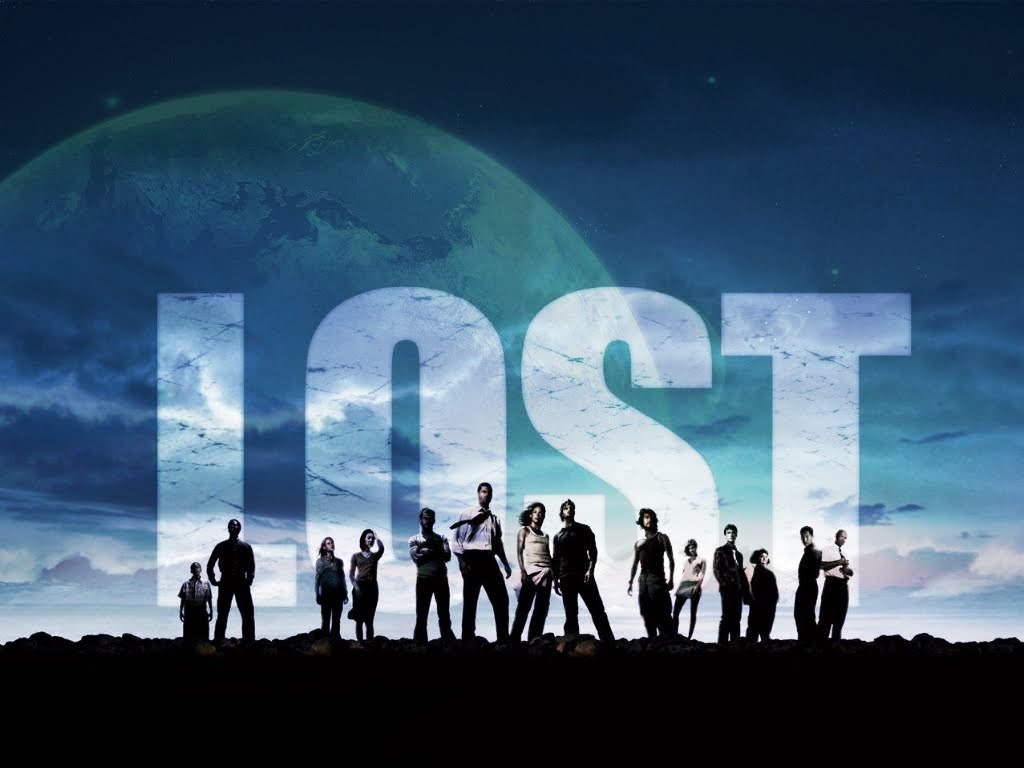
The End of LOST - And Why It Matters

Questions. Monsters. Numbers. Polar Bears. Lottery winners. Cons. And constants.

Tonight marks the end of Lost. It has lasted a strong six years. Critically acclaimed. Fanatic approved. It has been an addiction and fascination of mine for four years. I watched seasons 1-4 by myself, and even re-watched them with my wife. It became OUR show. Our pastime. Our conversations. All the way to the end.


The show is my obvious favorite for a number of reasons.

1. Characters. I've often said that the most real people I know are on Lost. Ok, so that may not technically be right, there is some truth to that statement. The characters act irrationally because of the baggage of their past. Daddy issues. Drug addictions. Incompetence. Arrogance. Bitterness. Betrayal. But more fascinating than their baggage is how they eventually develop and overcome their problems. Addict to hero (Charlie). Savior complex to servant (Jack). Coward to protector (Desmond). Overprotective to sacrificial (Michael).

2. Literary illusions and references. My favorite character is Desmond. I realized this when I realized that my favorite episodes were Desmond's episodes. His episodes would always step into the science fiction. Time travel. Precognition. Parallel universe. But there is more. His story reflects Odysseus' story. In Homer's epic, Odysseus travels the world, separated from his lovely Penelope (or Penny), and is stranded on an island for several years. While gone, Penelope's hand is requested for marriage by suitors. Do you remember how many? 108 (the sum of the Lost numbers. 4+8+15+16+23+42=108). The Lost writers are notorious for intertwining literature into their characters, stories and dilemmas. Stephen King. Charles Dickens. Wizard of Oz. Star Wars (and I LOVE the Star Wars references).

3. Those brilliant cliffhangers. Every episode. Almost anyway. Just about every episodes ends with a "Wait, what? WHAT?!" Sometimes cliffhangers for the sake of cliffhangers (Jack playing football with Tom). And others show masterful storytelling (an entire season built up on getting a hatch open, only to have the last few seconds of the season shot from inside the hatch looking out).

To contrast, I love hearing people talk negative about the show. Those who don't 'get it'.

"I turned it off after I saw the polar bears."
"They don't actually answer any of the questions."
"Jack was my favorite character until season 3. Then he became a jerk."
"The characters are lost? More like the audience that watches the show. They're the ones who are actually lost." Clever. How original.

I've even heard a handful of individuals Christian-ize the show.


But to Christian-ize the show is to lose what the writers had intended. The show is not about any one religion or one people group. It is about all of humanity.

Christianity.
Islam.
Grecian mythology.
Games.
Dreams.
Pregnancies.
Death.
Secrets.
Leadership.
Philosophy.
Literature.
Character connections.

But most of all, central to the show, is the question that underlines all of humanity's ideology. The question of fate or free will. Are our steps our own? Or have our destinies been prewritten?

Do I have a soul mate? Or do I choose the most compatible person?
Was it her time to die? Or was she cheated with a short life?
Are some destined for greatness? Or do we make our own luck?
Are we in control? Or are we puppets on strings?

And so this fictitious television program asks the question that hits all too close to home. Is it fate or free will? Even several charcter names originate from philosophers who prominently debated on fate and free will (Jack Shepherd, John Locke, Jeremy Bentham, Desmond David Hume, Edmund Burke, Mikhail Bakunin, and Danielle Rousseau, C.S. Lewis, Anthony Cooper).

So to us, who are followers of Christ, how do we approach this question? Well, we have our own form of debate: Calvinism and Arminianism. And to be honest, I am unspeakably tired of this debate. I know that many people are. Calvinism is the idea that certain people are ordained and predestined to be saved by grace, and others aren't (fate). Arminianism is the response to Calvinism. Everyone freely chooses to accept or reject God's grace (free will).

You may already have a strong opinion on the subject. Or these terms may be new to you. Where do I stand? I'm glad you asked.

In theory, I don't know. I don't know which theological idea is truer or more biblical. But in practicality? In the everyday in's and out's? I fully trust that God is in control (fate). I believe that God has a great plan for my life (fate). Yet at the same time, I believe it is my responsibility to pursue wisdom, applying godly knowledge to make choices (free will). I constantly ask God and myself, 'What is the wisest and smartest thing to do in this situation? What is the wisest and smartest thing that I should pursue?' (free will). I believe that God is sovereign. Nothing that happens catches him off guard or surprised (fate). But I pray as if everything is depending on my prayer to change things (free will). I treat people as if my influence helps them decided if there is Jesus is real or not (free will).

I don't think it is either/or. I believe it is both/and. That may sound like a cop-out or simple answer to a complex question. But I believe otherwise. I think it is more challenging and complex to see the world this way. There is constant tension. A constant dissatisfaction of not knowing which.

It is fascinating to watch Lost characters Jack Shephard and John Locke live out this tension. Jack is rational, scientific and makes his own choices. Locke is driven by faith, superstition, instinct and fate. Fans know their catch phrases by heart:

Jack, "I have to fix this."
Locke, "This is my destiny."

Fate.
Free will.
Choices.
Destiny.

As the series comes to an end, the writers are not going to answer the question for us. "You thought it was fate, but look, it was free will the whole time." or "Gotcha, fate wins again!" Rather, they have put into words the question that so many people spend our lives asking.

Even those of us with the strongest opinions, when truly pressed, admit that we don't know for sure. So that tells me that truly knowing doesn't truly matter.

I can't wait for the finale. Sad to see my favorite show end.

--------

1. How do you see fate and free will?

2. Did you like the finale?


Sunday, October 11, 2009

Why I respect Jay Bakker

If anyone has a right to hate God, I think it would be Jay Bakker.


Don’t know him? You may remember his dad, Jim Bakker. Jim Bakker of TV’s Praise the Lord. Jim Bakker who was arrested for fraud. Jim Bakker, the first of many televangelist to fall into scandal. If anyone has a right to hate God, I think it would be Jay.

Imagine the hell of watching your prestigious father go from Christian television’s biggest hero to behind bars. Imagine the betrayal. Imagine how he was treated by self-righteous Christians for his father’s sins. My heart broke for him when I read his autobiography, where he recounted the fall. Jay did nothing wrong, but he suffered more than anyone.

Being abandoned by his father to prison, abandoned by the church who ridiculed him, Jay turned to rebellion, drugs and bitterness.

For years, Jay worked at a church he started in Atlanta, The Revolution. Late one night, while walking the streets of Atlanta, I was speaking with a man who ran a homeless shelter. He mentioned that The Revolution was a few blocks down the road. I asked him, “What do you think of Jay Bakker?”

“Jay is weird.” He replied, probably alluding to Jay’s liberal theology. “But Jay loves Jesus. I have no doubt about that.”

If anyone has the right to hate God, I think it would be Jay. But he doesn’t.

Jay found God’s grace when he extended it others. He forgave the people he hated the most, his father’s consultants turn betrayers.

Jay found God’s healing when he shared his pain to crowds of Christians. Finally accepted after years of chastisement, as they listened to his pain rather than hurl their insults, God healed.

When I think of this tattoo covered preacher, I don’t think of his father’s sins, nor his years of rebellion, I think only of God’s grace.

If Jay can love God after the undeserved hardships he has suffered, then so can we.